
You are currently browsing the tag archive for the ‘Podcasts’ tag.
2024 was a BIG year. On June 6, The Greatest Menace team attended state parliament in Sydney as guests of the Premier of New South Wales, Chris Minns, as he formally apologised to the LGBTQIA+ community for injustices suffered before homosexuality was decriminalised in 1984. The apology was partly triggered by our podcast. Pat, Simon, and I listened along with TGM contributors Jacquie Grant, a trans woman and former inmate of Cooma Prison, and gay couple of 55 years Terry Goulden and John Greenway, as politicians of all stripes spoke of their regret at the demonisation visited on the LGBTQIA+ community until 1984.
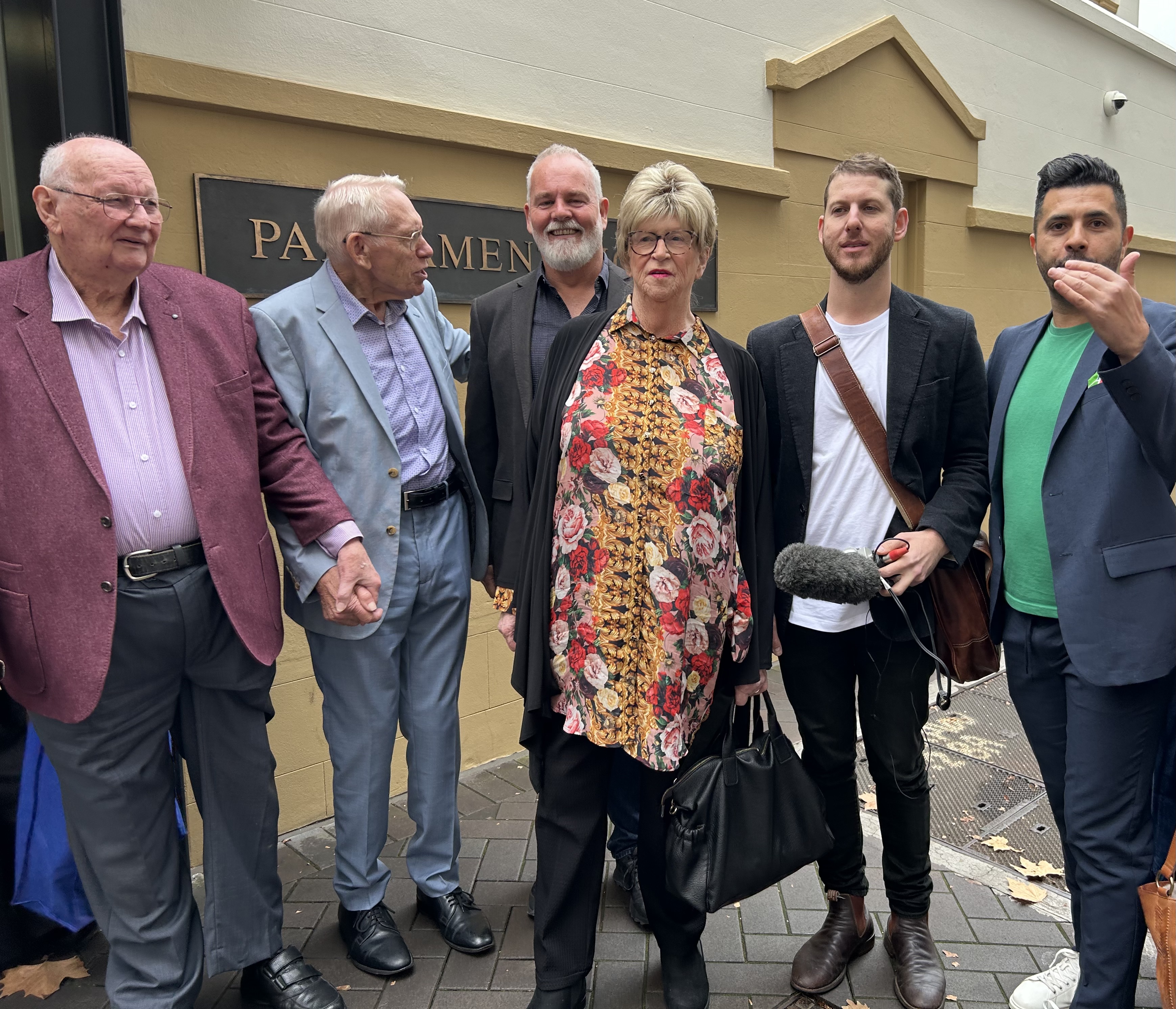
Outside Parliament House, Sydney, 6 June 2024, before the apology. From left, Terry Goulden and his husband John Greenway; Paul Horan, executive producer, Audible; Jacquie Grant; Simon Cunich; Pat Abboud, beckoning to Siobhán McHugh to join the photo rather than take it.
I wrote an in-depth article that analyses the making of the podcast: ‘Intimacy, Trust, and Justice on The Greatest Menace, a Podcast Exposing a “Gay Prison”.’ It’s published in the open access journal Media and Communication – download free pdf HERE.
Podcast Studies Roundtable, IAMCR 2024, Brisbane
Also in June, I co-convened, with Prof Mia Lindgren, the first ever Podcast Studies preconference event at the IAMCR (International Association of Media and Communications Research) conference. Organised with help from fellow pod scholars Dr Dylan Bird and Lea Redfern, it was a wonderful sharing and celebration of academic podcast research. We deliberately kept the event small and intimate, the 18 scholars from four continents forming a proto Podcast Think Tank that we hope will continue to develop research networks and collaborations – see the full report on proceedings.
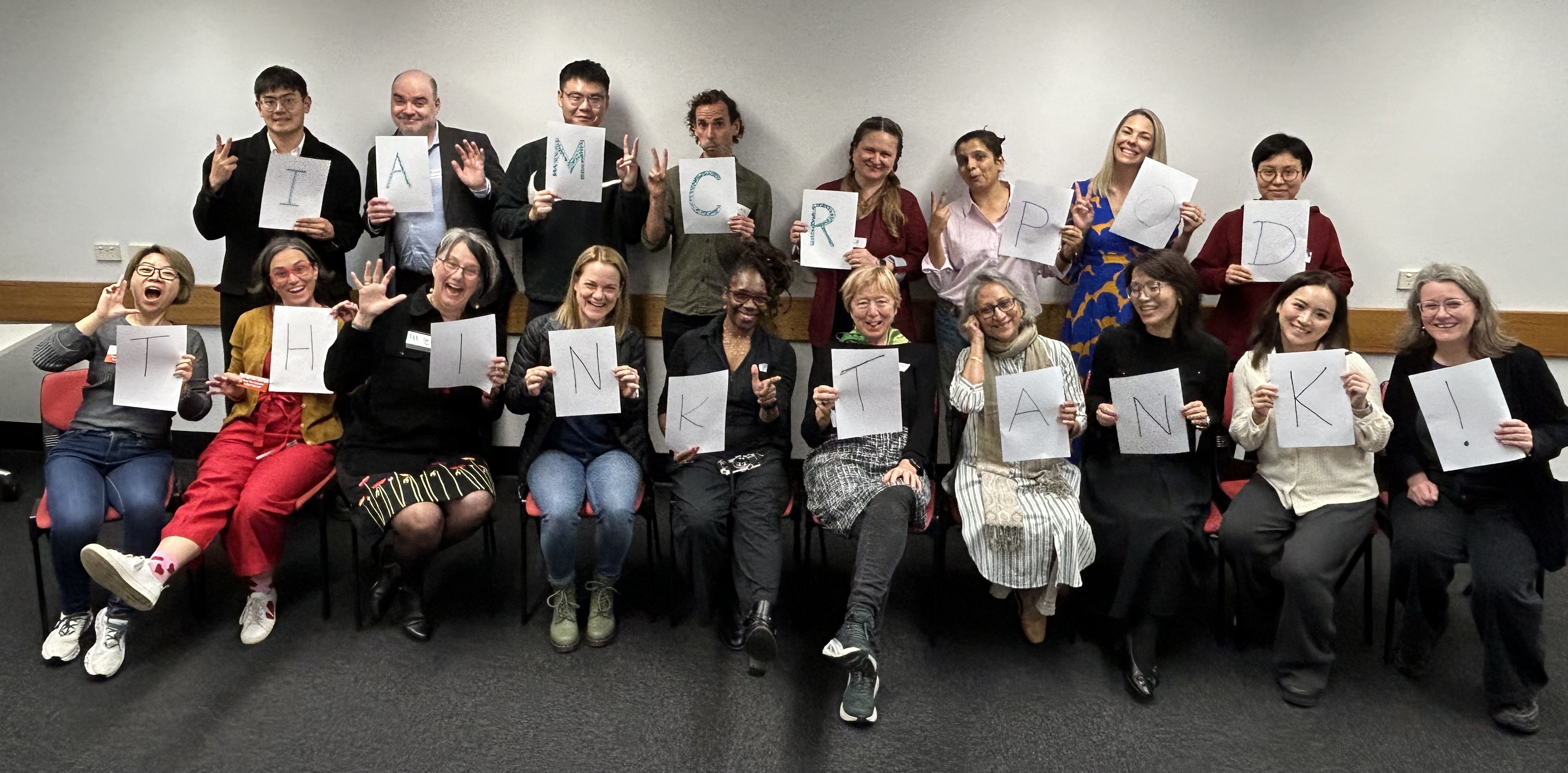
Pod scholars from China, India, the US, Africa and Australia letting loose after an intense, rewarding – and fun! – day.
HEART of ARTNESS – Season 2
Back home in early July to another intimate podcast gathering: the reconvening of the team from Heart of Artness. We used the excellent Rodecaster kit to record a stimulating chat in my lounge room that will (one day!) kick off a second season. It will incorporate interviews I did a while back now with Indigenous artists such as Archie Moore, whose breathtaking work, Kith and Kin, won the Golden Lion award at the Venice Biennale in April 2024 – the highest global accolade. Archie was already meditating in our interview on the ruptures wrought by colonisation which he explores in his Biennale installation.

Team from Heart of Artness podcast preparing for S2: Guy Freer, technical producer; Ian McLean, art historian; me and Margo Neale, co-hosts.
Filmed interviews & lectures from Sydney to Madrid
In September, I was pleased to give a series of guest lectures on everything from podcast aesthetics to ethics, to media/sound students at Macquarie University, where I am Honorary Associate Professor in the Dept of Media, Communications, Creative Arts, Language, and Literature. I’m also a member of their dynamic Creative Documentary Research Centre. So I was delighted to be interviewed for the CDRC by colleague Dr Helen Wolfenden, on all manner of podcast-related themes, from practice to pedagogy. The full interview is online here, usefully subdivided into chapters – handy for teaching perhaps.
The short clip below has me reflecting on whether narrative podcasts are art or journalism. It was clipped by Florence Lumsden, an indie podcaster based in North Carolina, whose show The Format delves into the podcast industry – my interview with Flo will be up early in 2025.
Which reminds me: I did a loong and satisfying interview with Spanish journalist Gorka Zumeta on all things podcasting following my residency in Madrid at Universidad CEU San Pablo in late 2023, kindly hosted by Dr José María Legorburu. Gorka probed deeply into the philosophy of sound and the business of audio/podcast journalism – it’s published in both Spanish and English, here.
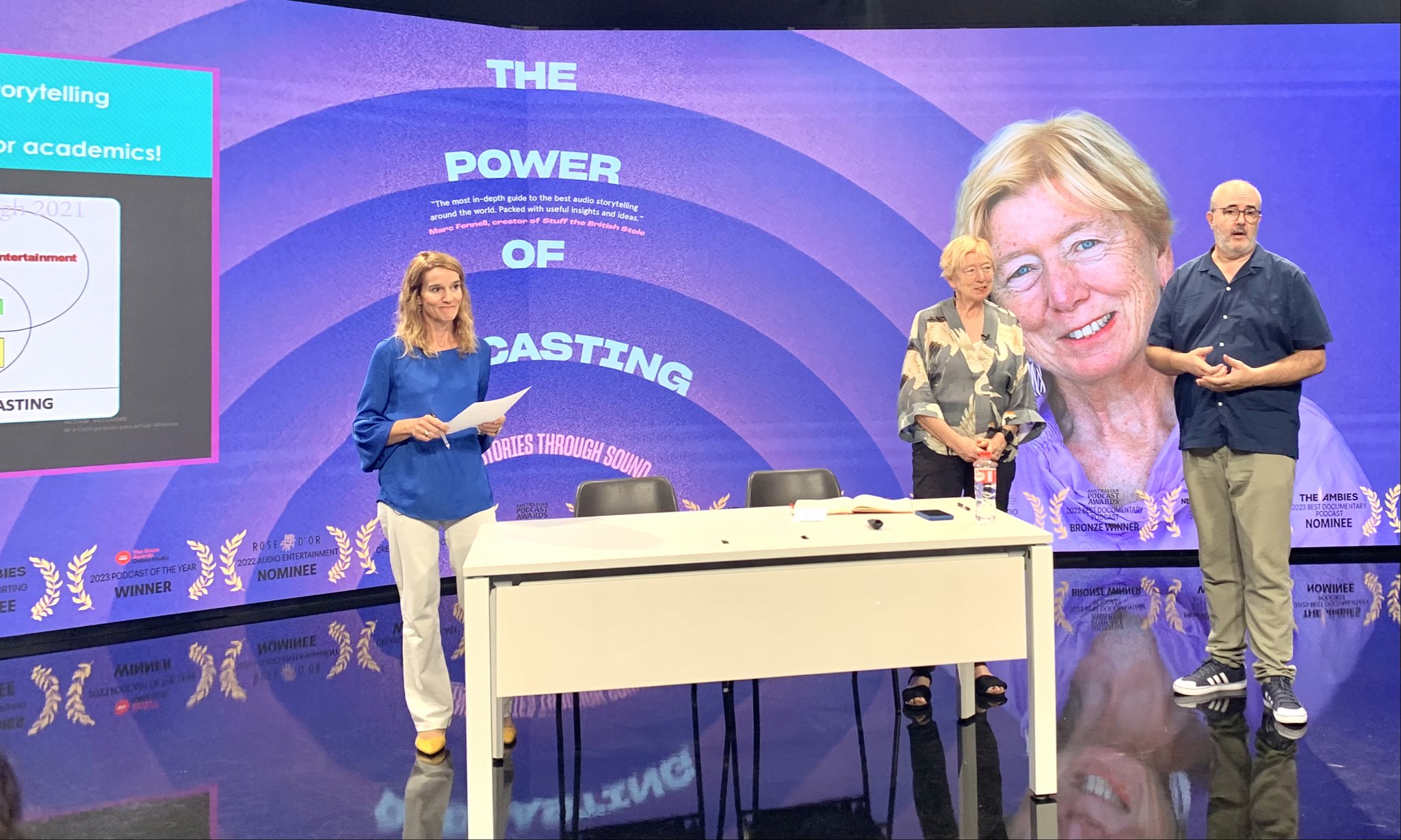
Being introduced at CEU San Pablo against a life-size image of my book!
ORAL HISTORY meets PODCASTING
For me, podcasts, radio documentary and oral history are interlinked, as I always turned my big oral history projects into an audio series, and sometimes a book as well. My first book was a social history of the Snowy Scheme, a huge hydroelectric project that became the birthplace of multiculturalism in Australia. I was lucky enough to interview many dozens of those European migrants who made a fresh start here after WW2 by working on it – and what a diverse, polyglot bunch they were. In October, for the 75th anniversary of the scheme’s launch, I got wheeled out again to talk about that remarkable time, when people of over 30 nationalities who’d been fighting each other only a few years before, came together in the rugged Australian Alps to build one of the engineering wonders of the world. Better still, I got to play audio clips from the original oral histories I recorded in 1987/88 – the full collection is archived in the State Library at Sydney.
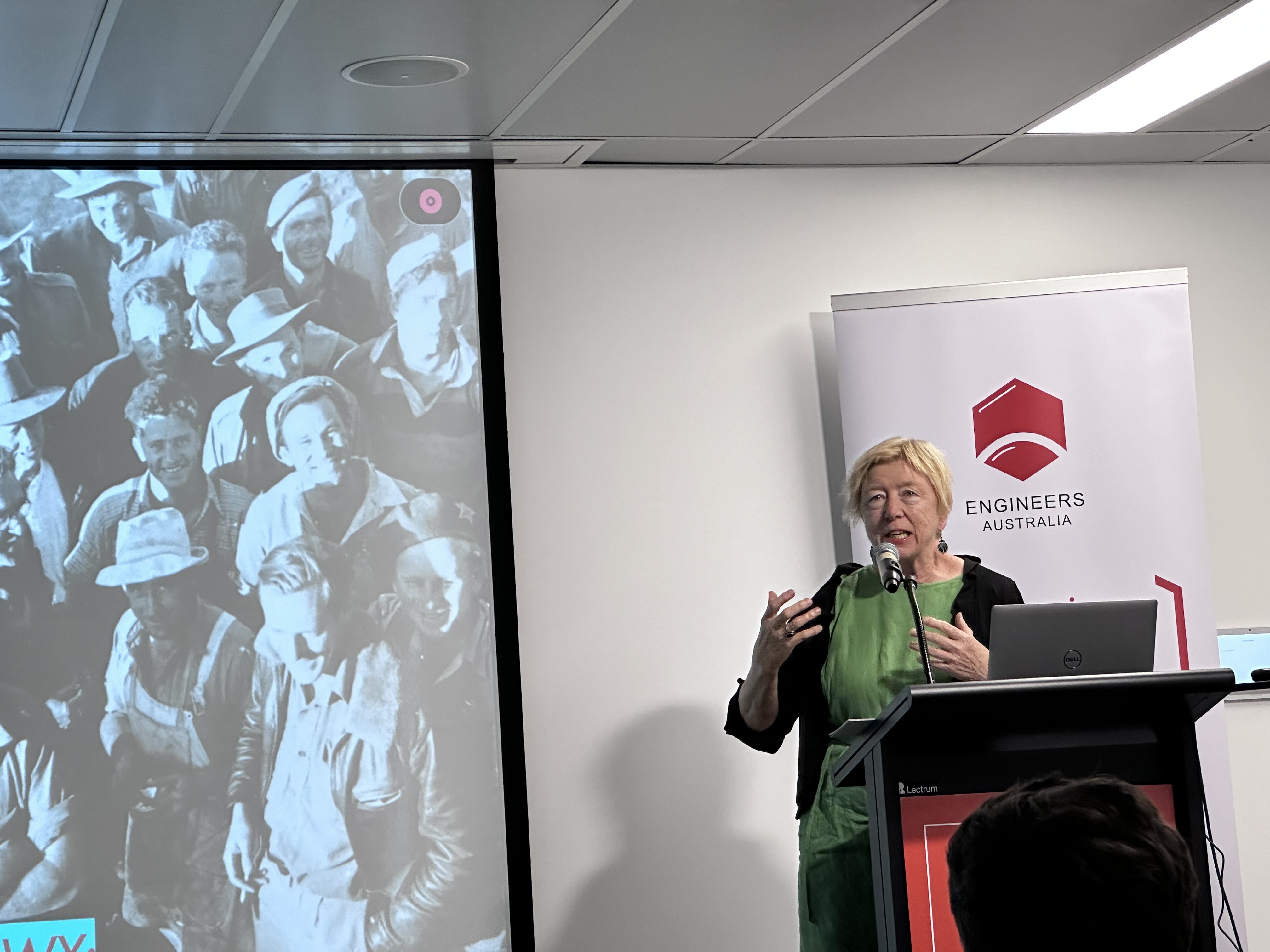
Speaking at the Engineers Australia event, slide of Snowy workers c. 1951 behind.
It was a delight to speak to 800 engineers (100 in the room and 700 online) to celebrate the scheme. Most were young, many of them migrants themselves, and the culture shock and gradual accommodations between ‘Old’ and ‘New’ Australians of the 1950s and ‘60s resonated. The event was introduced by the extraordinary Arnold Dix, a Snowy boy who grew up by Lake Jindabyne, created by the project. Arnold has several degrees, in geology, law and engineering, and puts them all to good use as head of ITA, the International Tunnelling and Underground Space Association. Over fish and chips afterwards, Arnold told me how he’d supervised the rescue of some 40 Indian miners after a tunnel collapse the year before.
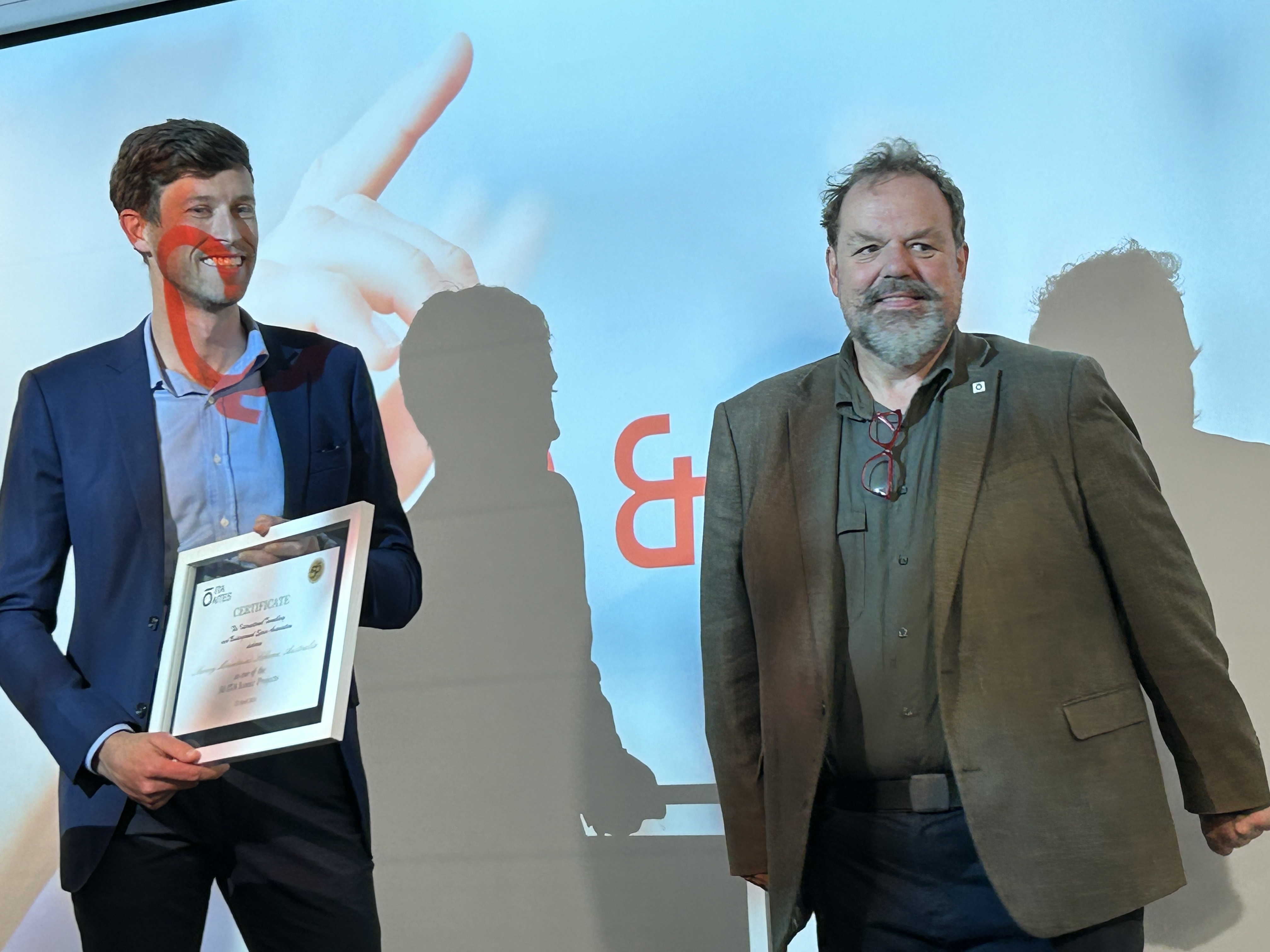
Arnold Dix (R) with Damon Miller, an engineer on Snowy 2.0, a current extension of the original project.
Arnold currently advises the UN and somehow runs a flower farm on the side. The Snowy is still producing great stories, 75 years on! I told several more of them on various ABC shows, including RN’s Late Night Live, where the redoubtable host David Marr rashly invited me to sing. Which is how my impromptu rendition of the old folk ballad, Put a Light in Every Country Window, was unleashed on an unsuspecting public.
In November, it was off to Melbourne for the Oral History Conference of Victoria. I loved meeting the current crop of practitioners and hearing about fascinating projects from interviewing centenarians to mapping Melbourne’s buskers as both a podcast and a PhD. But I was really hanging out to hear the keynote, by my inspiration of so many years, Alessandro Portelli, all the way from Rome. At 82, Sandro was as eloquent and insightful as ever on how we make meaning of our lives, and the stories we tell about them. He truly is the world’s most brilliant oral historian, as his colleague and friend Prof Alistair Thomson introduced him.
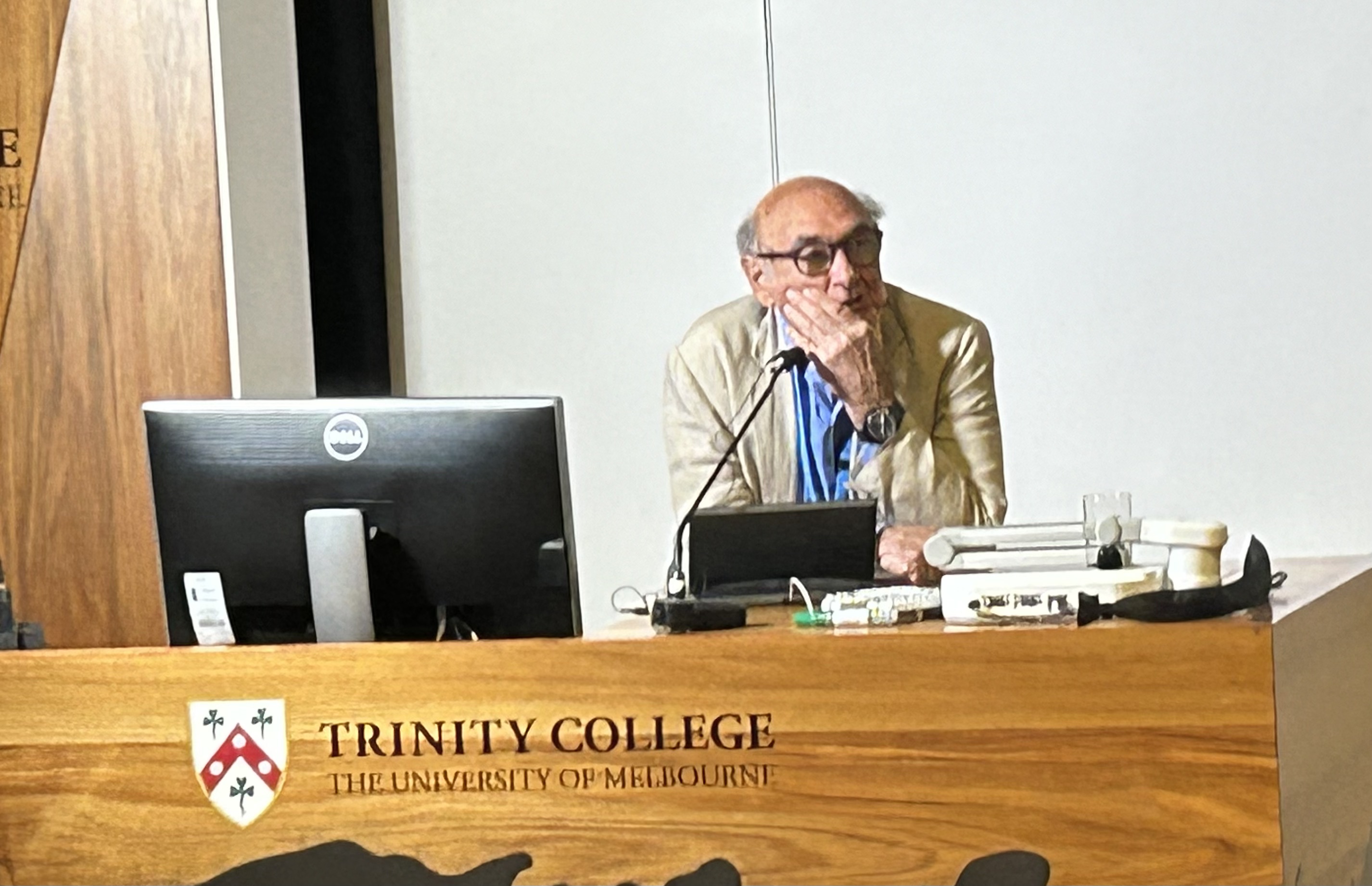
Alessandro Portelli delivering the keynote at OHA Victoria Conference, Nov 2024.
I was thrilled – and a bit nervous – when Sandro attended my own session, a masterclass on the making of The Greatest Menace. The format, of converting interviews to serialised storytelling, crafted with archival and ambient sound, was new to him, he told me – but ‘great’. That got me thinking: what if current podcast producers were to get together with Sandro, and ask him to select and discuss works from his archive? What a cracker podcast that would be – because the meaning and impact of oral history only deepens with age and fresh contexts. Later I introduced Sandro to some excellent Italian podcast academics and practitioners… and the excitement was mutual. Watch this space! This is where the fellowship and shared community of audio people is so rewarding.
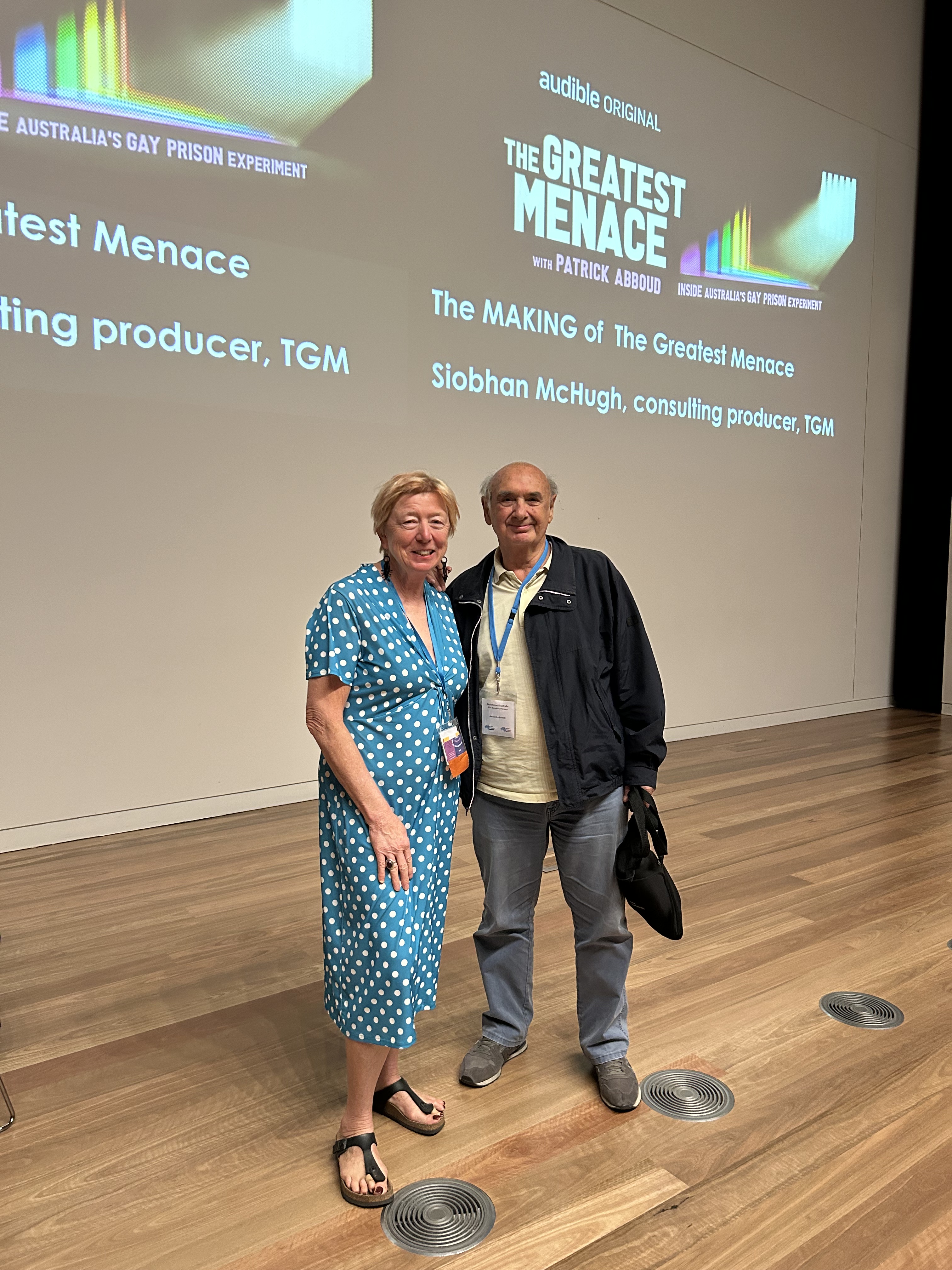
Honoured to have Alessandro Portelli attend my masterclass – and get interested in podcasts!
MY TOP PODCASTS for 2024
At year’s end, I delivered what has become an annual ritual – to select the year’s best podcasts for The Conversation. It’s always tough to whittle it down to ten, while trying to cover a range of genres and origins. There were obvious ones, such as The New Yorker and In The Dark’s forensic expose of US war crimes in Iraq. But there were also ones that might have flown beneath your radar, such as The Belgrano Diary, a tour de force hosted by the Scottish writer Andrew O’Hagan, laden with poetic, sonorous reconstructions and memorable observation. (‘He looked like he’d been on a lifelong gap year.’).
Some I couldn’t fit in include Trial by Water (revisits the ghastly story of the father who drove his three boys into a dam and adduces compelling new evidence), Cement City (a tender if overlong portrait of a declining US town) and Baghdad Nights (an examination by my old collaborator, Richard Baker – Phoebe’s Fall, The Last Voyage of the Pong Su – of the sordid macho world in which Australian wheat officials associated with the Saddam Hussein regime).
2025 is shaping up to be exciting.

I’m headed to Europe in Sept/Oct, to present at the International Oral History Conference in Krakow. The conference dinner is being held at the Kosciuszko Mound – a memorial to the great Polish freedom fighter, after whom Australia’s highest mountain is named. It’s in the Snowy Mountains, site of my first book. I love these synchronicities!
Meanwhile, it’s high summer here and I’m off to the beach with Godot dog. And yes, he’ll make us wait 😄

Happy New Year!
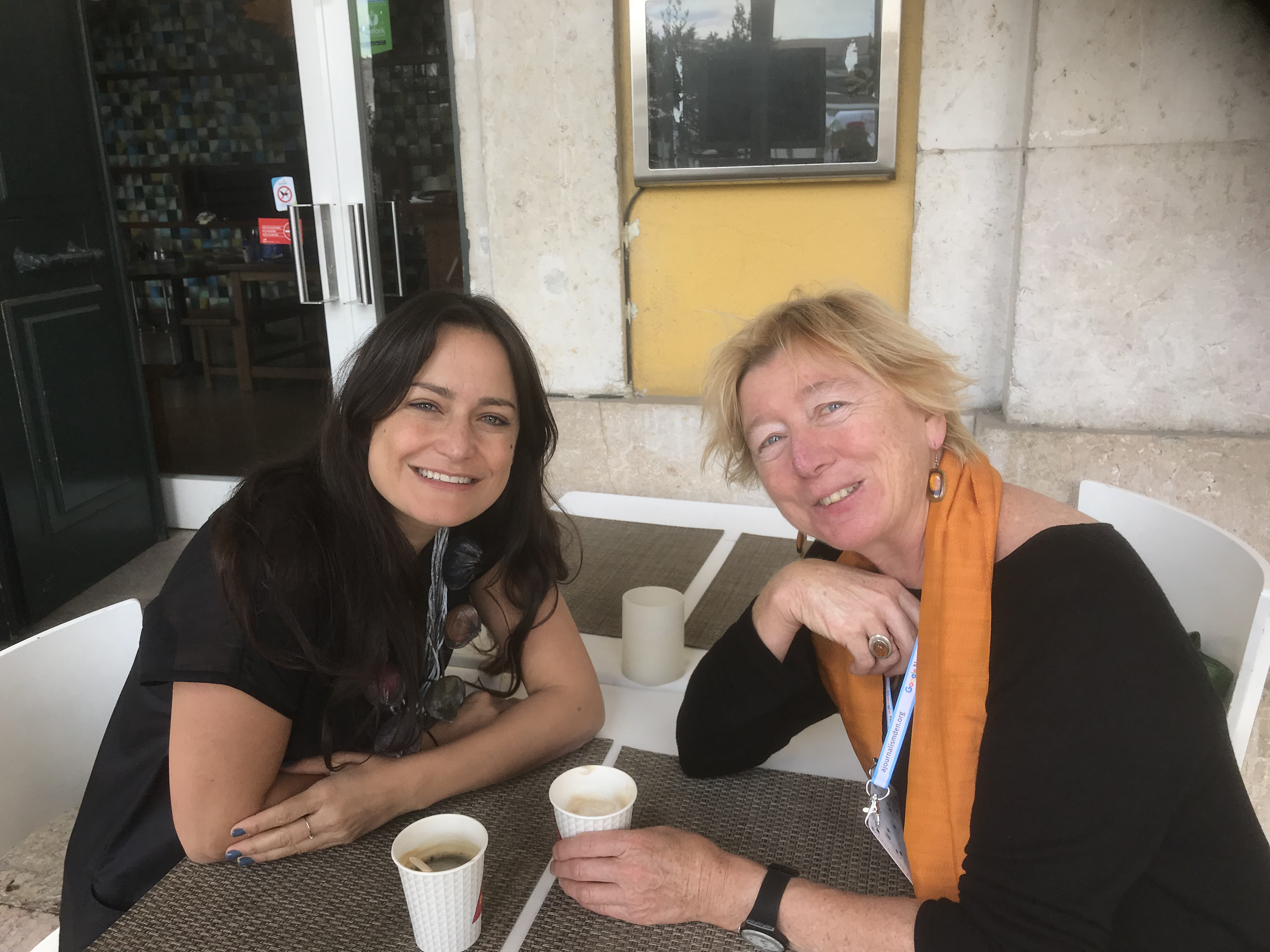
PIC: Siobhan McHugh and Carolina Guerrero, CEO of Radio Ambulante Studios, Lisbon.
Colombian podcast executive Carolina Guerrero attended a narrative podcast workshop I gave at the Global Editors Media Summit, Lisbon, in 2018 and we found lots to talk about afterwards. I love Carolina’s work at Radio Ambulante, so when my book The Power of Podcasting was coming out in 2022, I asked her to read it and give me a comment for the cover. ‘An invaluable resource for anyone interested in understanding today’s global podcasting phenomenon. I learned so much,’ she generously responded. I’m more used to being reviewer than reviewed, but it got me thinking about being the subject of the review. So I’ve reflectively collated a range of reviews of my book here.
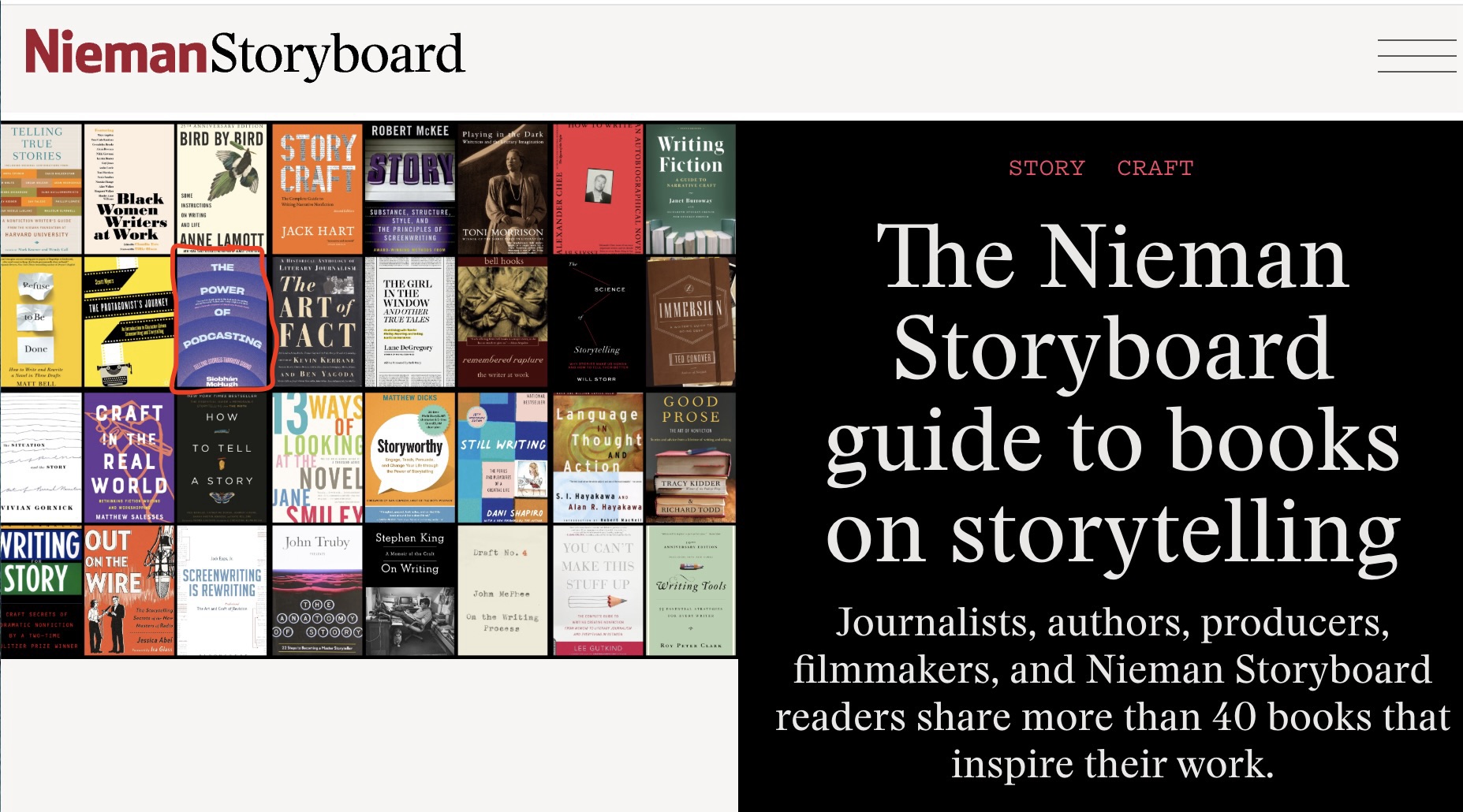
In 2025, I was delighted to learn that my book was included in Harvard’s respected Nieman Storyboard’s recommended Books on Storytelling Craft – along with renowned authors Stephen King, Toni Morrison and … Aristotle!
I’ll freely admit the book is a strange mix: a sprawling /ambitious attempt to understand how podcasting has reinvigorated audio storytelling and ignited an appreciation of the power of voice and sound. One chapter is history, the next is how-to, line-by-line minutiae of actual before and after scripts I’ve worked on and an unpacking of the invisible teamwork that makes a premium narrative podcast sing. There are deeply personal anecdotes, professional insights and academic musings. There are wildly unscientific assertions, such as my belief that audio folk are in general a better class of media person, with a tendency to be more empathetic and decent.
The common denominator is my passion for all things audio (purple cover is a clue). But really the style and scope reflect my own varied experiences across 40 years’ immersion in audio, first as a radio producer in RTE in Dublin, then as a freelance documentary-maker with ABC Australia, then a transition to academia and the painful journey to theorise what was previously a purely practical/intuitive/creative pursuit – and finally the glorious new era of the podcasting revolution, which for narrative podcasts took off with Serial‘s explosion onto the scene in 2014. Now I’m in the happy position of being a maker/creative AND a theorist/critic, a teacher AND a researcher, but most of all perhaps, an evangelist for audio storytelling and the power podcasting brings to that.
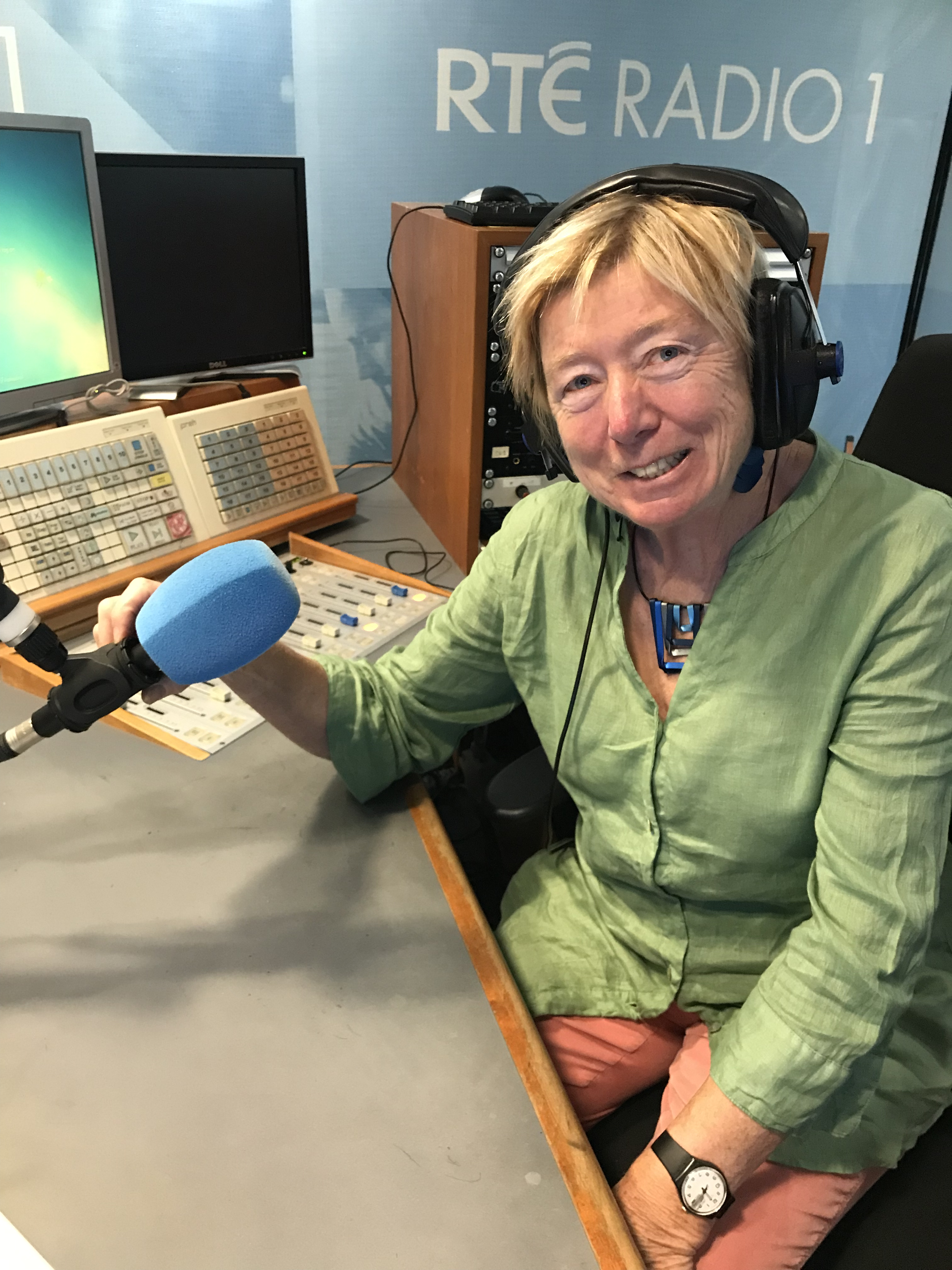
PIC: Siobhan back in RTE in 2022 – where the audio journey started, 40 years before.
THE REVIEWS
Matěj Skalický, a Czech radio journalist and academic writing in Media Studies: A Journal for Critical Media Inquiry, embraces the non-linear, not easily categorised nature of my writing about all that. And even laughs at my jokes! He does admonish me mildly for not paying more attention to the Polish literary reportage tradition (sorry Poland! Maybe the sequel he suggests?), but otherwise – what more could you ask than this thorough and perceptive review? A rare and special moment, to feel heard.
McHugh’s book is a wonderful contribution to the global research of podcasting. In its many insightful stories about well-known podcast series, it acts as a manual of what a narrative podcast should be and how to make one. While the book eschews pure scholarly language and its lack of quotation style makes it less acceptable in traditional academia, it is ultimately also much more enjoyable to read.
Matěj Skalický, ‘WHY DO WE ALL LOVE PODCASTS?’
The analysis of the author’s podcast series is the most valuable part of the book, revealing the behind-the-scenes procedures of making an award-winning podcast. By showing the characteristics of intimacy and authenticity, the specifics of narrative and storytelling, the evolutionary development from radio broadcasting, and the triumph of targeting the younger audience, McHugh allows the reader to truly understand the power of podcasting. The questions of why everyone loves them so much and how to make them are not so mysterious anymore. McHugh shows the power of podcasting and allows the reader to harness it, as promised; everyone who reads the book will fully understand what a complex, yet flourishing phenomenon podcasting is. And what is more, as McHugh notes, it is also God’s gift to ironing.
I also appreciated this long and insightful piece by Astrid Edwards in The Australian Review of Books, which credits my book with arguing for (the best narrative) podcasting as a literary/art form.
The strength of the work is clear when exploring the history of the medium. These sections are, to put it simply, fascinating. There is a dearth of information (whether written or audio) about the evolution of podcasting as a storytelling medium, and McHugh provides a tantalising entry point. For lovers of storytelling – whether fiction and non-fiction – these in-depth sections are a delight. McHugh delves into the history of radio (including news commentary and sports broadcast) to explain the elements of podcasting as an artistic medium.
Astrid Edwards in The Australian Review of Books
Podcasting is also a form of literary journalism… McHugh’s analysis of how the New Journalism movement of the 1960s and 1970s influences narrative podcasting today begs to be read. The Power of Podcasting is a reminder that audio storytelling is an art form. It can change minds and influence opinions, and its reach is vast.
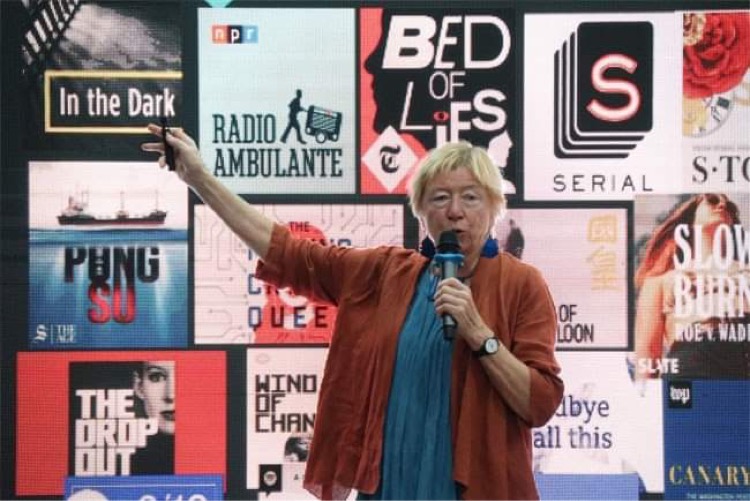
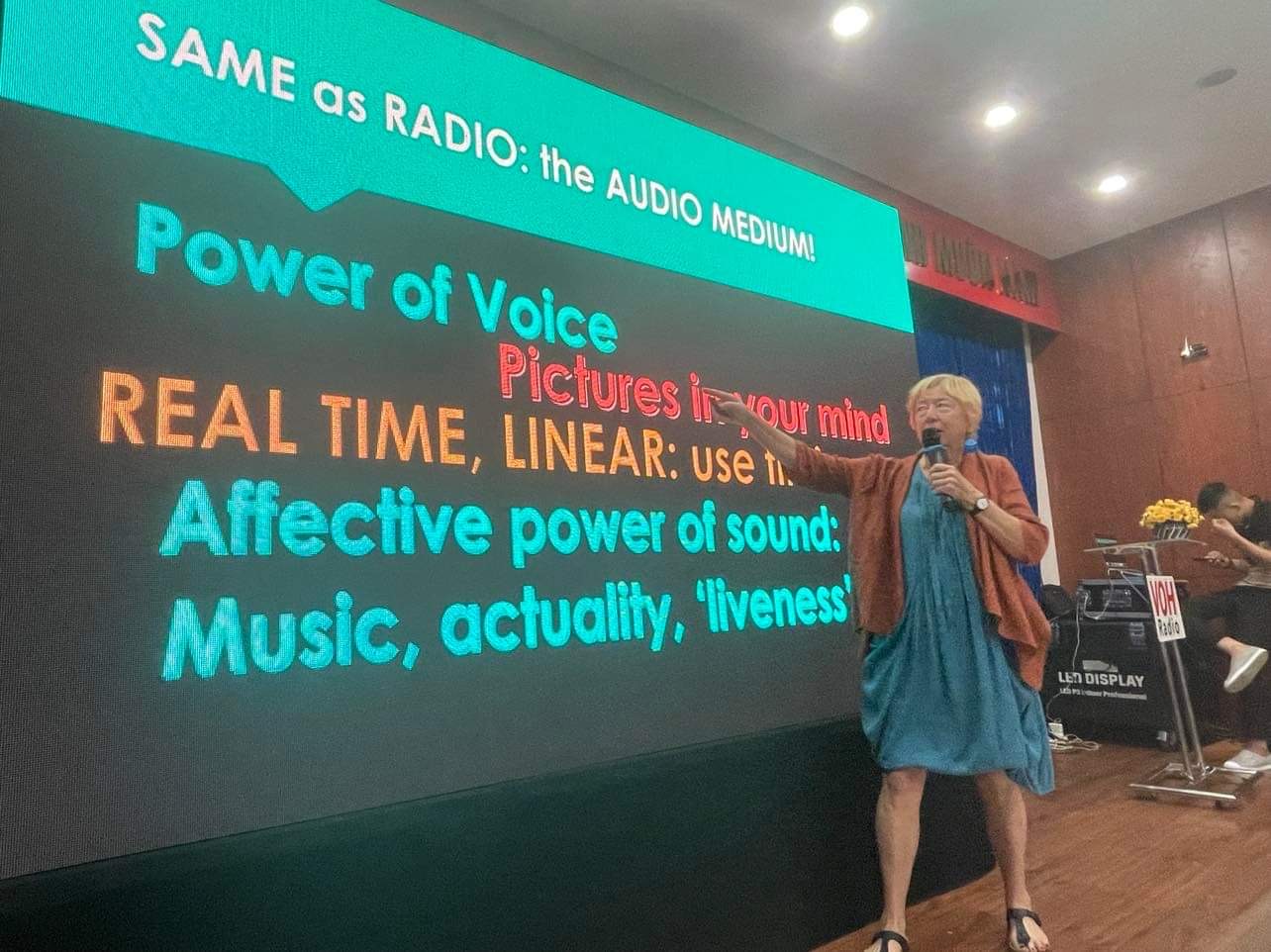
PIC: Siobhan giving a talk on narrative podcasts at the National Radio Festival of Vietnam, 2022
ACADEMIC CRITIQUES
Reviews in academic journals, all positive, interestingly took different perspectives. Writing in The Radio Journal: International Studies in Broadcast and Audio Media, Gurvinder Aujla-Sidhu notes that I set out to distil the magic of narrative podcasts. She concludes: ‘She certainly achieves that, her passion and knowledge for audio storytelling captures the reader.’ A former radio journalist-turned academic, Gurvinder is buoyed by my rash advocacy of audio makers:
I particularly liked the assertation [sic] that ‘we storytelling folk are generally a good bunch, softer than the average media apparatchik, more inclined to care about fairness and social justice’. It is a point that stayed with me after reading it; good journalists need to be empathetic and have people skills in order to tease out highly personal and often private stories out of individuals. Within podcasting the host/presenter needs to understand that storytelling in audio is an intimate art. People trust podcasters with their precious memories, stories and experiences and the skill is how that story is brought to life.
Gurvinder Aujla-Sidhu in The Radio Journal: International Studies in Broadcast and Audio Media
Gurvinder also singled out my book’s attention to diversity and social inclusion in podcasting.
This makes this book stand out from others on podcasting as the overview is global in its outlook and is genuinely interesting because the developments are occurring in real time… Chapter 9 offers a deep dive into the drive to include diverse voices in the podsphere. There is an examination of the podcast market in China, a look at diversity at the BBC, PRX and The Equality in Audio Pact and its impact upon The Prix Europa.
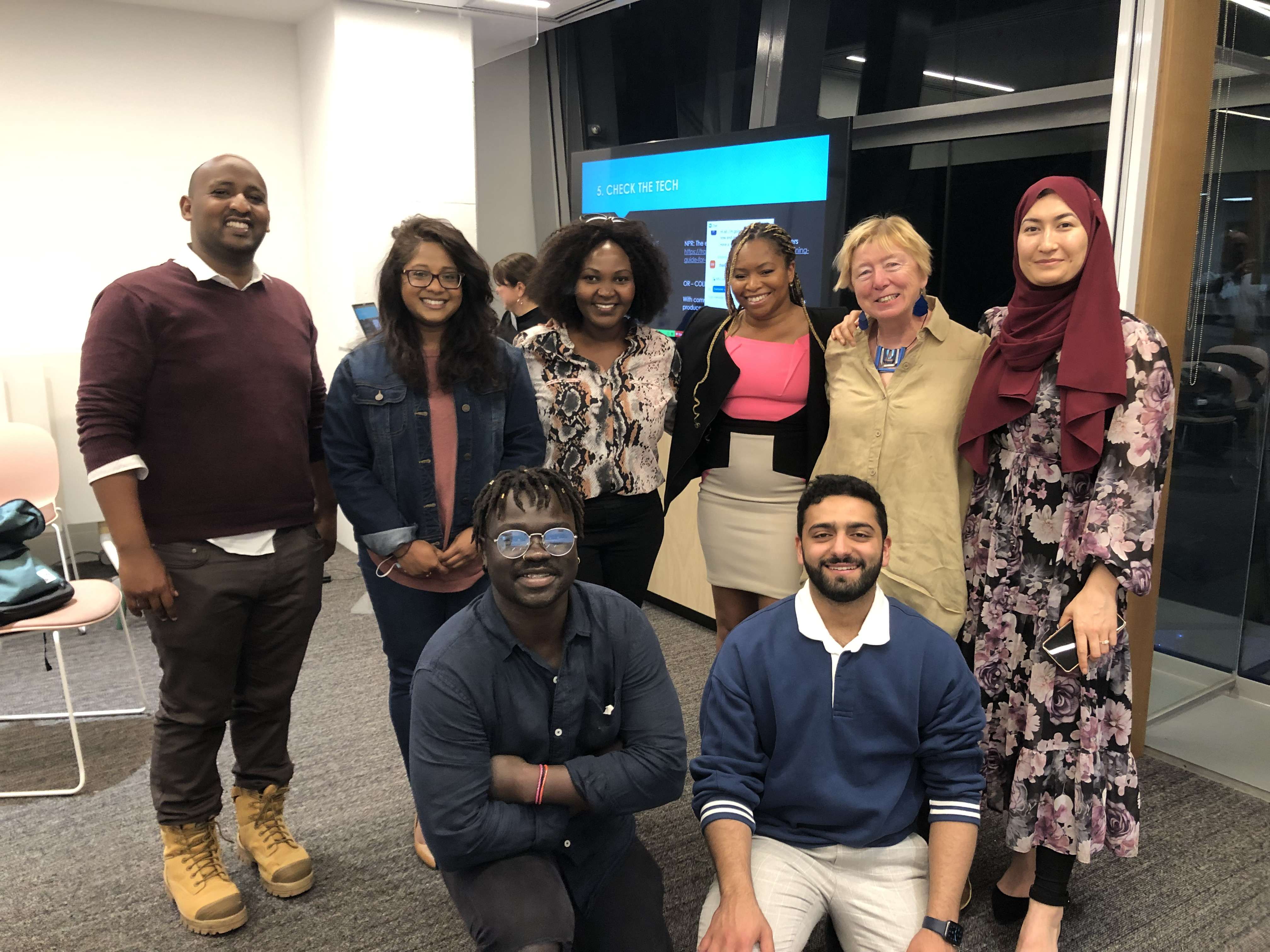
Reviewing in Portuguese for Radiofonia: Revista de Estudos em Mídia Sonora, PhD candidate Helena Cristina Amaral Silva is buoyed by my focus on sound. A rough translation: ‘It is with a keen eye on the seductive power of sound and the countless possibilities that the use of sound elements offer to podcasting productions that the author turns, in the work, to storytelling podcasts.’ Silva concludes:
The work presents a broad overview of productions in podcasting of a storytelling type, and constitutes a reference for researchers, professionals, amateurs and other people who are interested in the subject…The debates outlined show the innumerable challenges of the sector, but also shed light on the many possibilities offered by podcasts, productions that since their beginnings demonstrate potential for promotion of diversity, inclusion and voices that do not find space in the mainstream media.
Helena Cristina Amaral Silva in Radiofonia: Revista de Estudos em Mídia Sonora
Manuel Álvaro de La-Chica Duarte a PhD candidate in podcast studies at the University of Navarra, Spain, who is researching the role of the podcast host, is interested in the how-to aspects. Writing in Austral Comunicación, he notes:
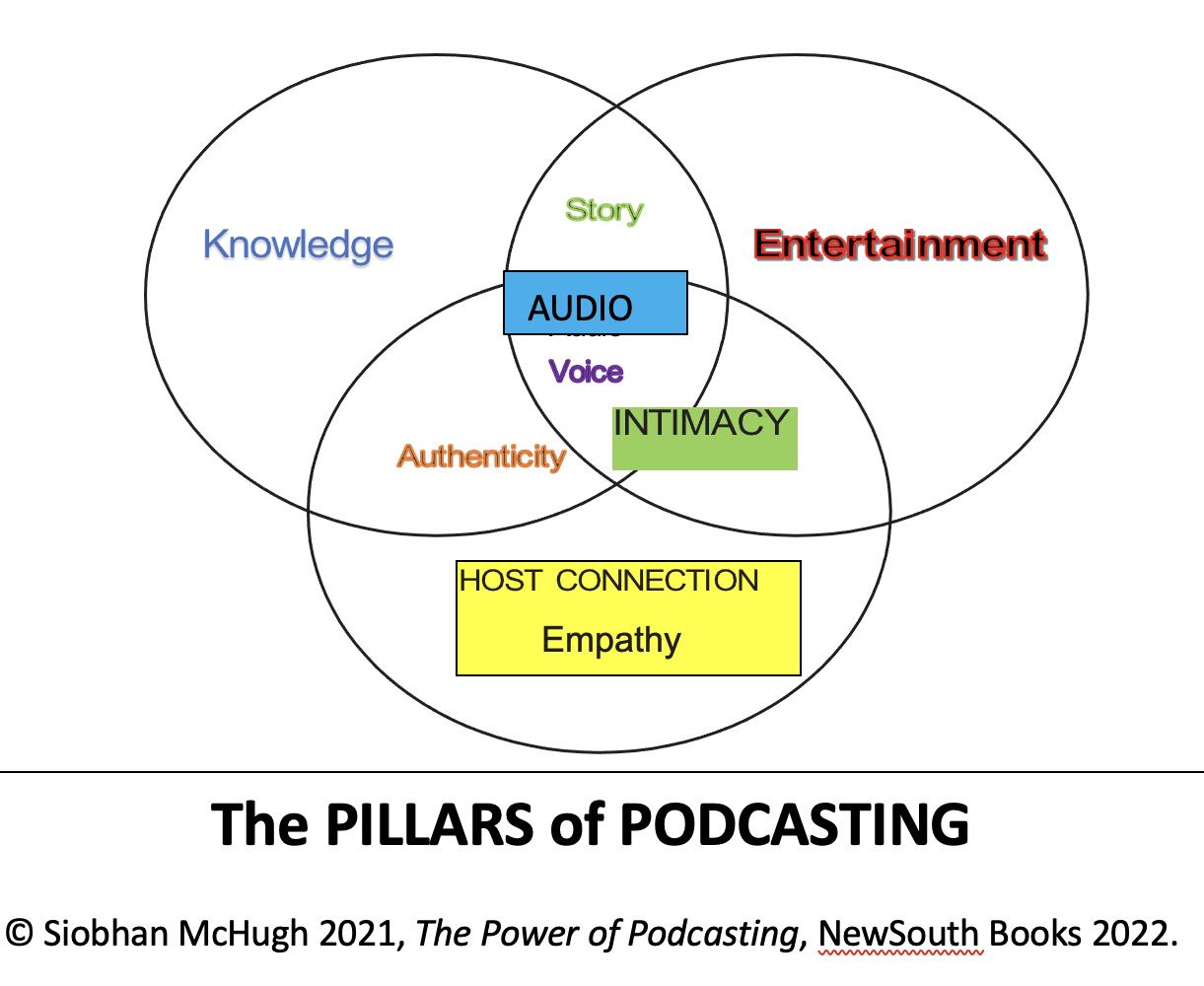
McHugh propone un gráfico con el que muestra lo que ella denomina «los pilares del podcasting». Según su esquema, el poder dela voz reside enla unión de tres elementos: el conocimiento, el entretenimiento y la empatía que construye el anfitrión del programa. Estos tres elementos-que llevan directamente a pensar en el logos, pathos y ethos de la retórica clásica- McHugh los interrelaciona también para destacar otras características de los podcasts.
Manuel Álvaro de La-Chica Duarte in Austral Comunicación
McHugh proposes a graphic showing what she calls “the pillars of podcasting.” According to this scheme, the power of the voice resides in the union of three elements: knowledge, entertainment and empathy that the host of the program builds. These three elements -which lead directly to thinking about the logos, pathos and ethos of classical rhetoric- McHugh also interrelates them to highlight other characteristics of podcasts.
En definitiva, McHugh ha escrito un libro sobre podcastque, por su propia forma de narrar, podría ser un podcast, puesto que lo escribe desde esos tres pilares que menciona al principio de su obra. Por un lado, ella misma forma parte de la historia que está contando. Por otro, utiliza un lenguaje muy oral para mostrarse cercana y construir una intimidad con el lector. Y, al mismo tiempo,cuenta desde la autoridad professional le da el haber formado parte del equipo de producción deesos podcastspremiados. Además, la elección de escribireste libromezclando reflexión con casos concretos es un recordatorio continuo de que, por mucho que se analice el medio,no hay reglas de oro para el éxito de un podcasty cadauno de ellos debe buscar la forma de conectar con sus audiencias en sus circunstancias concretas.
Manuel Álvaro de La-Chica Duarte in Austral Comunicación
McHugh has written a book about podcasts that, due to her own way of narrating, could be a podcast, since she writes it from those three pillars that she mentions at the beginning of her work. On the one hand, she herself is part of the story she is telling. On the other, she uses very oral language to be close and build intimacy with the reader. And, at the same time, it comes from the professional authority of her having been part of the production team of those award-winning podcasts. In addition, the choice to write this book mixing reflection with specific cases is a continuous reminder that, no matter how much the medium is analyzed, there are no golden rules for the success of a podcast and each one of them must find a way to connect with their audiences in their specific circumstances.
In Australian Journalism Review, veteran digital media analyst and PhD candidate Margaret Cassidy writes:
Siobhán McHugh is uniquely placed to write this book. She is both a highly respected and award-winning audio and radio producer and an audio studies academic and practical audio skills trainer. As a well-honed storyteller, she uses an informal style, personal anecdotes and content reviews to introduce the reader to many of the great audio producers around the globe and their works.
Margaret Cassidy, Australian Journalism Review
The Power of Podcasting is both a practical examination and a brief history of the relatively new audio medium of podcasting. This combination provides not only an absorbing introduction for media scholars and practitioners who are entering the field of audio storytelling, but a useful textbook for audio and podcast undergraduate classes and a fascinating read for both industry practitioners and keen listeners. However, beyond this, McHugh’s book is first and foremost a love letter to long-form audio storytelling.
A review in H-Net for the H-Podcast (a site I’ve only just stumbled across) celebrates my ‘narrative /memoir’, declaring (perhaps over-stating!) that ‘Siobhan McHugh has been an integral part of podcasting’s evolution since her foray into radio in 1981.’ Reviewer Dan Morris continues: ‘The Power of Podcasting recounts the incredible journey podcasting has taken from its birth through today. While that tale could be told by many, hearing it from someone with such intimate knowledge brings a sense of warmth and personality. It is like unearthing a time capsule and being part of the action all at once.’ I do like that descriptor – I am still actively making podcasts (The Greatest Menace dropped a cracker bonus episode in February), but I also draw on decades of tradition and best practice. Dan goes on:
To tell the full story of podcasting she has created four distinct narratives… the history and evolution of podcasting, the art of crafting an audio story, lessons for podcasters, and McHugh’s personal experiences. The Power of Podcasting draws you in from the very first words. McHugh storyboards a plotline from an audio editor’s point of view and explains the options she has in building that story… The creation of a soundscape, interviewing skills, the use of pauses to add emphasis, and deciding how to cut interviews down to mere phrases are all explored in great detail throughout the book. Sometimes it feels like the reader is getting a front row seat to the greatest behind-the-scenes moments of podcast editing.
Dan R. Morris, H-Podcast, H-Net
McHugh’s memoirs constitute the book’s third plotline. Few have been as involved as she was in the evolution of the medium. Stories she has worked on, memorable interviews, impactful moments of podcasting, and highlights of award-winning podcasts are peppered throughout the 282 pages.
And in RadioDoc Review, where I have stepped aside as editor for now, reviewer Robert Boynton, Professor of Literary Journalism at New York University, notes that my book ‘begins from a place of sheer wonder’.
It ‘brings the reader in the process of creating a podcast, with all the economic and social challenges that entails.’ This ‘audio-first’ book ‘considers podcasting as a cultural phenomenon, embedded in the practices of journalism and nonfiction storytelling… McHugh writes as a practitioner with an insider’s understanding of how podcasts are made.’
Robert Boynton, RadioDoc Review
It’s wonderful to know that the book is appealing to such a wide audience. It was not written as a strictly academic text, but it is deeply researched, and universities are using it to support their teaching of podcasting. Among them are Muhlenberg College, PA, USA; Toronto Metropolitan, formerly Ryerson, Canada; University of Sheffield, UK; University of Sydney (800 podcasting students across four courses), University of Technology, Sydney; Macquarie University, Sydney and RMIT, Melbourne, Australia.
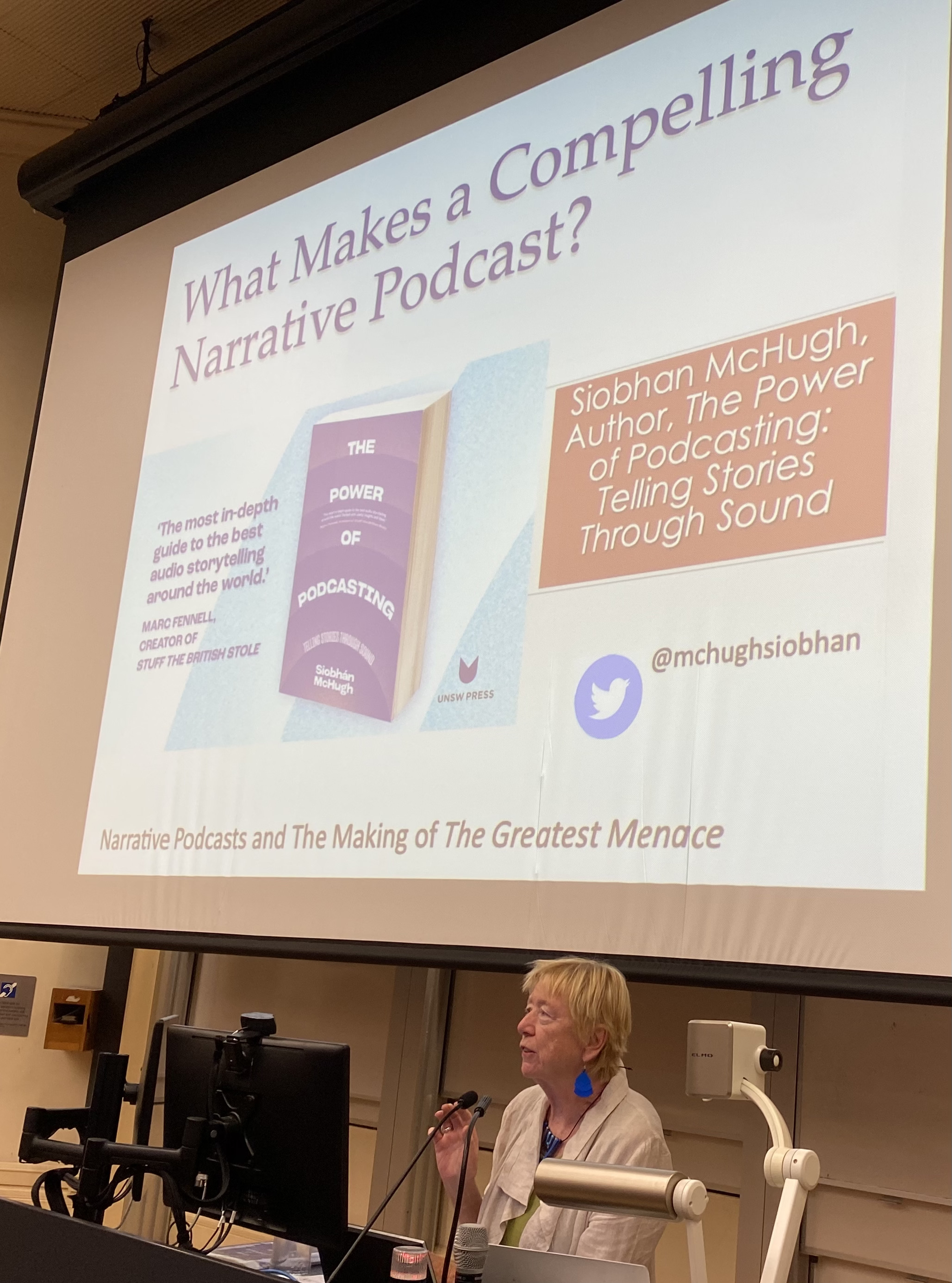
PIC: Siobhan delivering a guest lecture, University of Sydney, 2023.
I particularly like when my work crosses over to industry and beyond, to general podcast listeners. I was amused to see award-winning Sardinian indie podcast producer Cristina Marras tweet that my book was ‘incredibly approachable’, DESPITE (my caps) my being an academic.
And when I stumbled across this review on Amazon, from someone totally new to podcasting, it made my day. Thank you debs 1221!
5.0 out of 5 stars A Must-Have for Getting Up to Speed on Podcasting
New to the podcast landscape I found this book to be a great resource to learn a timeline and history of podcasting with some wonderful and interesting anecdotes along the way. The author provides a list of great resources available online, in book form and podcasts of great interest. I know I still have a lot to learn about podcasting but feel that this was an amazing pick to take my first foray into podcasting. One word of advice, bookmark or jot down important things you want to remember and research more about later. I’m now combing back through the book to find the many things I told myself I’d explore later but when the list kept growing, it became harder to recall… It’s an amazing contribution–highly informative plus an enjoying read!
debs 1221 – reviewed in the United States on 27 February 2022
See more book reviews/comments, from podcast studies scholars and noted podcast industry people, here.
TALKS/MASTERCLASSES/KEYNOTES/SEMINARS/CONSULTANCY
I am open to speaking engagements, and teaching/research offers, in the academy and/or industry. I am also available as a consulting producer, to advise on narrative podcast development and production. Contact me at podcastpolly@gmail.com for rates and availability.
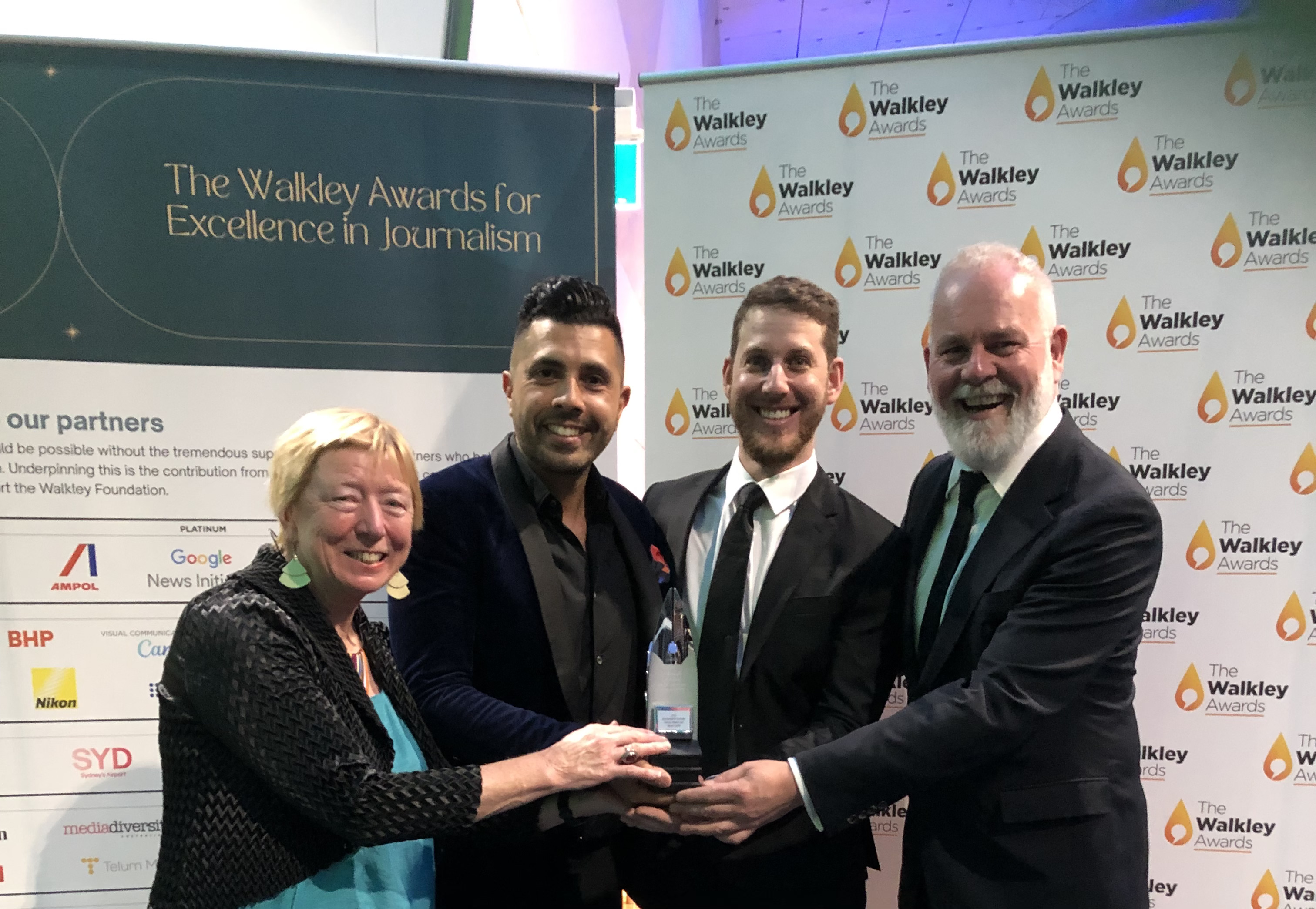
PIC: The Greatest Menace wins a Walkley Award, Australia’s highest journalism award, 2022. Siobhan is with TGM co-creators Patrick Abboud (also host) and Simon Cunich, and Paul Horan, Audible Australia.
 Siobhan McHugh